Working on Three Projects at Once Is Keeping Your Rates Low
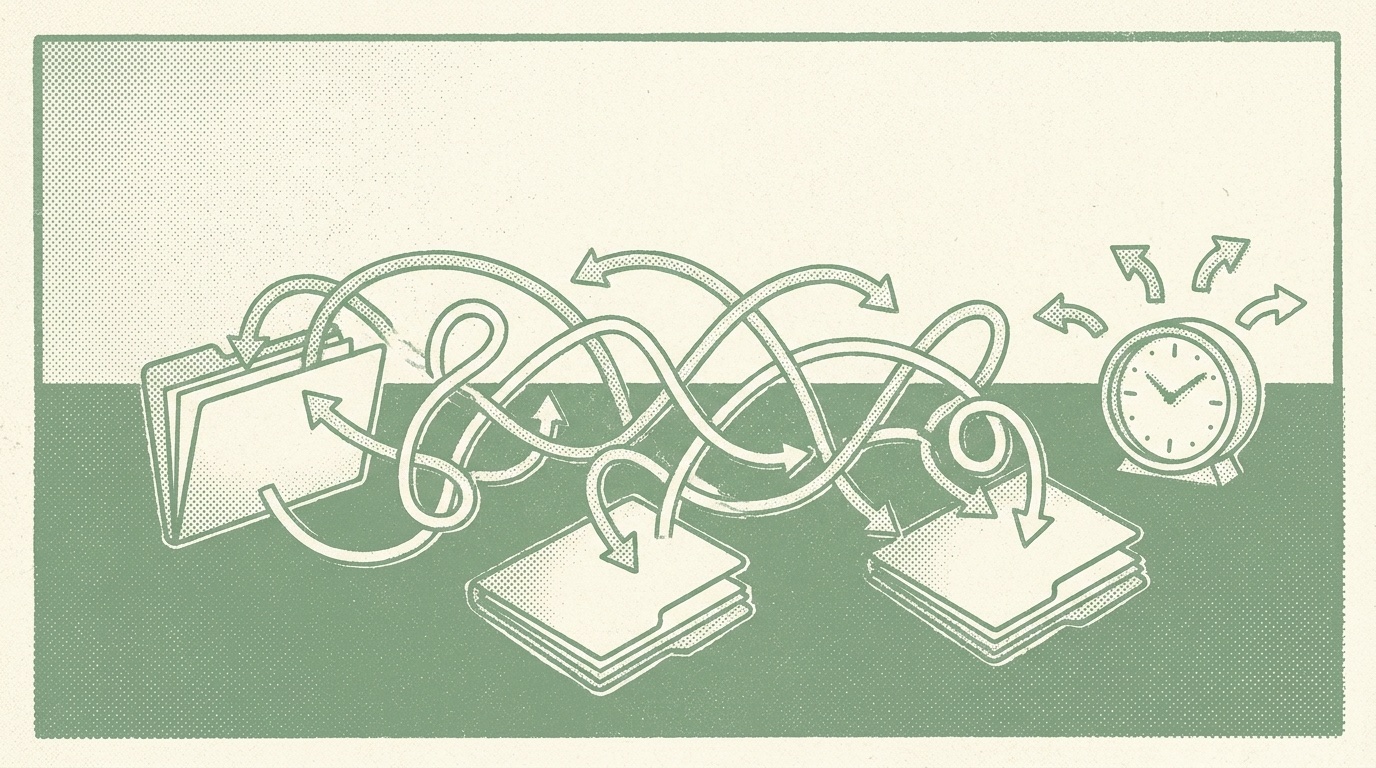
By 10am, you've answered a client email, reviewed a pull request, drafted an invoice, joined a check-in call, and spent twenty minutes trying to remember where you left off on the design brief that's actually due today. That's not a productive morning. That's a morning that cost you about an hour in invisible overhead.
This is how most freelancers work: reactively, across everything at once, with context switches happening every twenty minutes. It looks like hustle. What it actually does is compress the quality of your output and quietly inflate how long your work takes — which, in turn, makes it harder to raise your rates, meet your own estimates, or feel like you're gaining any ground.
Context switching has a real cost — and it compounds
Research on cognitive load consistently finds that switching between tasks doesn't happen instantly. Your brain discards the working context of one task and has to rebuild it for the next. For simple work, that cost is low. For the kind of work freelancers do — writing, designing, building, thinking critically — it can take 15 to 25 minutes to reach the depth of concentration that produces your best output. If you're interrupted twice an hour, you might spend a full working day never reaching that depth at all.
The math is uncomfortable: a four-hour design session with three client messages and two quick replies in the middle is not a four-hour session. It might produce two hours of quality output in four hours of sitting. You've billed four, delivered two, and left wondering why you feel behind.
Why fragmented work quietly caps your earnings
When work consistently takes longer than it should, two things happen to your rate structure. First, you start underestimating your project quotes — because you've never actually seen how fast you move when fully focused, so your estimates are built on fragmented performance. Second, you stop raising your rates because you don't feel fast or confident enough to justify a higher number. Both problems come from the same source: your best work is hidden from you under a layer of constant interruptions.
There's a client-side version too. Fragmented attention produces slightly worse work that takes slightly longer. Neither is dramatic in any single project, but over time it shapes how clients perceive your reliability — and whether they refer you confidently. The freelancers clients describe as excellent are often not dramatically more skilled than their peers. They're working in conditions that produce cleaner, faster results, and clients notice without knowing why.
What batching actually means
Batching isn't about scheduling all of one client's work on one day. That's usually impossible and misses the point. It's about grouping tasks by cognitive type across all your clients.
A simple version: reserve your best focus hours — usually the first three or four hours of the morning — for deep work only. Writing, design, development, anything that requires building a mental model and staying inside it. No email in that window. No Slack. Not even a quick reply. Then batch all communication into one or two fixed windows: a check-in at noon and another in the late afternoon. Admin, invoicing, and lighter reviews go in the transitions.
What you get from this isn't just more focused mornings. You get accurate data on how long your work actually takes when you're not interrupted. That data makes you a better estimator. Better estimates let you quote with confidence. Confident quotes hold under pressure — and occasionally get accepted without negotiation. That's the rate-increase path that doesn't require a confrontation: you start pricing from real performance instead of compromised performance you've mistaken for normal.
The context-switching tax is one of those costs that never shows up on an invoice. You pay it in slower work, foggier thinking, and a persistent sense of being behind even when you're technically billing enough. Batching doesn't add hours to your day. It makes the hours you already have worth more.
HelmBill tracks your billable hours and turns them into invoices — so you always know your real rate.
Try HelmBill free